How to Make a Voided Check for Direct Deposit and Payments
Making a voided check is surprisingly simple. You just grab a blank check from your checkbook and write VOID across the front in big, bold letters. That one word instantly cancels the check's ability to be used for payment, but it leaves all the important banking information intact for verification.
Understanding a Voided Check and Its Purpose

Have you ever been asked for a voided check and thought, "Why do people still use these?" It might seem a bit old-fashioned, but a voided check serves a very specific and important purpose: it's a foolproof way to share your banking details for setting up electronic transactions.
Think of it as a secure confirmation slip. When your employer needs to set up direct deposit or a utility company needs to establish automatic bill pay, they need your exact banking information. One tiny typo when entering those long strings of numbers could send your money to the wrong place, creating a massive headache for everyone. A voided check eliminates that risk by providing a clear, bank-issued source of truth.
Key Scenarios for Using a Voided Check
While digital options are becoming more popular, there are still a handful of common situations where a voided check is the go-to method. Knowing when you might need one helps you stay prepared.
- Setting Up Direct Deposit: This is the big one. Your company's HR or payroll department uses the information on the check to make sure your paycheck lands safely in your account every time.
- Arranging Automatic Bill Payments: Landlords, mortgage lenders, and utility companies often ask for a voided check to set up recurring ACH (Automated Clearing House) payments directly from your account.
- Correcting a Mistake: If you mess up while writing a check—maybe you wrote the wrong amount or misspelled the payee's name—voiding it is the right way to cancel it. This ensures no one can try to cash it later.
- Verifying Banking Information: Sometimes, when you're applying for a loan or opening a new investment account, the financial institution will request a voided check just to confirm you are the legitimate owner of the bank account.
A voided check has long been used as a low-friction method for reliably conveying your nine‑digit routing number and account number. Banks print these numbers in a special format at the bottom of checks so automated systems can read them with near‑100% accuracy, which is why payroll departments historically preferred this method over manual entry. You can learn more about how banks format checks for accuracy on Artsyltech's blog.
Ultimately, the whole point is to transfer your banking information accurately and securely. By physically marking a check as VOID, you kill its payment function while keeping the essential data perfectly legible. It's a simple but effective practice that has been trusted for decades to prevent costly financial mix-ups.
How to Void a Paper Check Correctly
Voiding a paper check might seem simple, but there's a right way and a wrong way to do it. Getting it right is crucial for setting up things like direct deposit with your employer and, just as importantly, for protecting yourself. You want to make the check unusable as a form of payment while keeping your essential banking information perfectly clear.
Let's walk through the process. It's quick, but the details matter.
First things first, grab a blank check from your checkbook and a pen. I highly recommend using a permanent marker or a pen with black or blue ink. Whatever you do, don't use a pencil or one of those erasable pens—anyone could just erase your "VOID" and try to use the check.
The Right Way to Write VOID
Now, with your permanent pen in hand, write VOID in big, bold letters right across the face of the check. You want it to be the first thing anyone sees, making it obvious this check can't be cashed.
Be smart about where you write it. The goal is to disable the key payment fields without covering up the info your employer actually needs. I always tell people to make sure the letters stretch across:
- The Payee Line ("Pay to the order of")
- The Amount Box (where the dollar amount goes)
- The Signature Line
By covering these specific spots, you make it impossible for anyone to fraudulently fill in a name, an amount, or a signature.
Here’s a great example of what it should look like.

See how the word "VOID" is large and clear, but it carefully avoids those important numbers at the bottom? That’s the key.
Protecting the Most Important Information
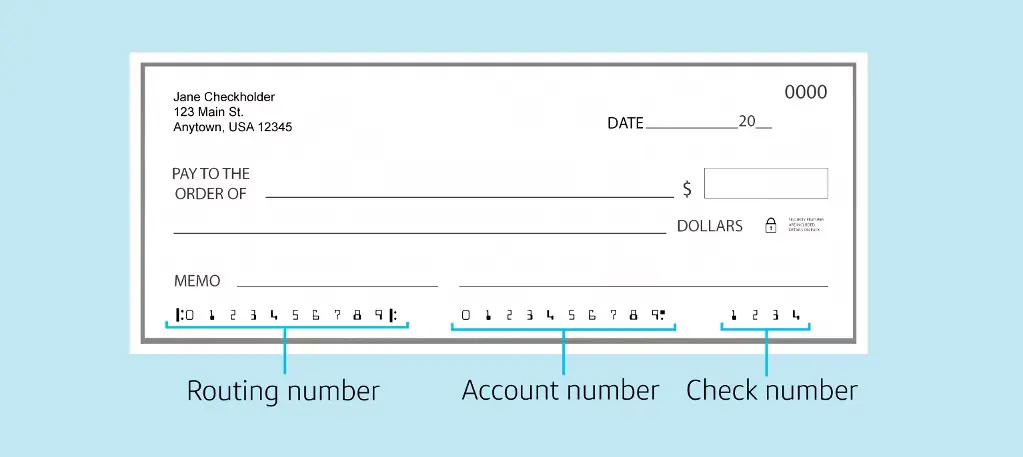
While you're busy making the check unusable for payment, there's one part you absolutely must not touch: the MICR (Magnetic Ink Character Recognition) line. That’s the string of numbers running along the bottom of the check.
This line holds two vital pieces of your banking DNA:
- Your bank's routing number (the 9-digit number on the left)
- Your personal account number (right next to the routing number)
It is absolutely critical that your "VOID" marking does not cover or obscure these numbers in any way. This is the information that payroll systems scan to set up your direct deposit. If their machines can't read it, they'll reject the check, and you'll be stuck waiting for your money.
Once you’ve voided the check properly, take a quick picture of it with your phone or make a photocopy. This is just for your records, giving you proof of what you provided. After you've given the check to whoever needs it and confirmed your direct deposit is working, you can—and should—shred the original to keep your information safe.
What to Do When You Don't Have a Checkbook
So, you just landed a new job, and HR is asking for a voided check to set up direct deposit. The only problem? You can’t remember the last time you actually saw a checkbook.
This is a really common situation. With digital banking and payment apps, physical checks have become a bit of a relic for many of us. But don't worry—you have several easy, paper-free options that will work just as well, if not better.
Find a Direct Deposit Form Online
Your first stop should be your bank's online portal or mobile app. This is often the quickest way to solve the problem.
Log into your account and navigate to a section like "Account Services," "Documents," or "Direct Deposits." Most banks now provide a pre-filled direct deposit authorization form you can download as a PDF. It’s a game-changer.
This official document neatly lays out everything your employer needs:
- Your full name as it appears on the account
- Your complete account number
- Your bank's routing number
- The bank's name and address
Since it's an official bank document designed for this exact purpose, it's the perfect modern substitute for a voided check. Payroll departments see these all the time.
Request an Account Verification Letter
If you can't find a downloadable form, asking for an account verification letter is your next best bet. You might be able to generate one yourself through the online portal, but sometimes a quick call to customer service or a trip to a local branch is necessary.
This is a formal letter printed on the bank's official letterhead that confirms you own the account. It clearly states your name, account number, and routing number, satisfying nearly any request for account proof. For more details on what specific banks offer, you can explore our list of major bank policies.
The move away from paper checks isn't just a consumer trend; it's an industry-wide shift. Payroll organizations like Nacha now actively encourage electronic methods because they cut down on manual data entry errors and streamline the whole setup process. It's simply faster and safer for everyone involved.
Another popular alternative you might encounter is micro-deposit verification. This is where a company sends two tiny deposits—usually just a few cents—to your account. You then log into their system and confirm the exact amounts, proving you have access. It's a clever method that bypasses the need for any document at all.
Using an Online Voided Check Generator

What happens when you don't have a checkbook but need to set up direct deposit right now? In the past, this meant a trip to the bank or a long wait for a new box of checks. Today, an online voided check generator is a fantastic, reliable alternative.
These digital tools are the perfect solution, letting you create a professional-looking document on the spot. Instead of digging through drawers for an old check, you just enter your banking information into a secure site. The service instantly formats everything into a clean PDF that looks exactly like a real voided check.
How These Generators Work
The whole process is built for speed. When you use a quality service, it cross-references your routing number with Federal Reserve data to make sure it's legitimate. This validation step is a big reason why HR and payroll departments are comfortable accepting these documents—it confirms the bank is real.
After your info is verified, the generator does its magic. The benefits are pretty clear:
- It’s Fast: You can have a fully compliant document ready in less than a minute.
- It’s Accessible: No more trips to the bank or waiting by the mailbox.
- It’s Professional: The PDF is clean, easy to read, and formatted correctly for any company.
The real value here is getting an instantly usable document that meets standard business requirements. When you make a voided check online, you’re creating a digital stand-in that does the exact same job as a paper one.
Is It Safe To Use a Digital Generator?
Handing over financial details online always feels a bit nerve-wracking, so it's smart to be cautious. Choosing a service that takes security and privacy seriously is non-negotiable.
A trustworthy generator will use bank-grade 256-bit SSL encryption to protect your data while you're creating the check. More importantly, the best platforms do not store your information after your document is generated and sent. Once you're done, your data is gone. For a reliable and secure option, you can create your voided check online with a trusted tool.
Physical Check vs Digital Generator
Deciding between a traditional paper check and a digital generator often comes down to convenience and what you have on hand. Here’s a quick breakdown to help you see the difference.
| Feature | Physical Check | Digital Generator (e.g., VoidedCheck.org) |
|---|---|---|
| Speed | Slow; requires finding checkbook or ordering new ones. | Instant; PDF is generated in under a minute. |
| Accessibility | Requires having a physical checkbook on hand. | Accessible from any device with an internet connection. |
| Cost | Can be costly to order new checks from the bank. | Typically a small, one-time fee per document. |
| Security Risk | Risk of loss or theft of the physical checkbook. | Secure with encryption; no data is stored. |
| Legibility | Handwriting can be messy or hard to read. | Always clear, professional, and machine-readable. |
Ultimately, both methods get the job done. But if you value speed and don't keep checks around, a digital generator is a modern, practical solution that delivers exactly what you need, when you need it.
Safely Sharing Your Banking Information

So, you’ve correctly voided your check. That’s a great first step, but you're not done yet. It's crucial to remember what that piece of paper still represents. Even with "VOID" scrawled across it, that check holds the keys to your financial kingdom: your routing and account numbers.
Think of it less like a canceled movie ticket and more like a key you've clearly labeled "Do Not Use"—it’s still a key. In the wrong hands, that information is all someone needs to set up fraudulent ACH transactions or unauthorized withdrawals from your account. This is why how you share your voided check is just as important as how you create it in the first place.
Best Practices for Secure Sharing
You always want to default to the most secure method available for sending your banking details. A common mistake I see is people snapping a picture and sending it over an unsecured email or text message. Those channels are surprisingly easy to intercept, leaving you vulnerable.
Instead, stick to these much safer options:
- Use Secure Portals: If your employer or the company you're dealing with has a secure online portal for uploads, use it. Every time. These systems are built with encryption specifically to protect sensitive data like yours.
- Deliver in Person: When dealing with a physical check, nothing beats handing it directly to the person who needs it, like your HR manager. This completely removes the risk of it getting lost or stolen in transit.
- Verify the Recipient: Before you hit send or hand anything over, take a moment to confirm you're dealing with a legitimate request. Be especially skeptical of sudden, out-of-the-blue emails asking for your bank info.
From a fraud-risk perspective, a voided check is a bit of a mixed bag. It can't be used for direct payment, but it still exposes that core account data. This is why financial institutions accept them for setting up accounts but are also wary of the information getting intercepted. Many companies are shifting toward fully electronic verification, which closes the window for interception and reduces their own fraud risk. You can find more expert insights on voided check security on HulkApps.com.
After You've Shared the Check
Your job isn't quite finished once the check is out of your hands. A little follow-up is key to making sure your information stays protected for the long haul.
First, always keep a copy for your own records—a quick photocopy or a digital scan works perfectly. This serves as your proof of what was submitted and when.
Once you've confirmed your direct deposit or automatic payment is officially set up (you'll see the first transaction hit your bank account), it's time for the final step. Destroy the original voided check if you still have it, along with any copies you made. And please, do not just toss them in the trash.
A cross-cut shredder is your best friend here. It turns that sensitive document into confetti, making it nearly impossible for anyone to piece your account and routing numbers back together. This one simple action closes the loop, ensuring a secure and successful setup from start to finish.
Got Questions About Voiding a Check? We've Got Answers
Even when you know the basics, a few specific questions always pop up when it's time to actually void a check. Getting the details right from the start is the key to a smooth setup and keeping your bank account secure. Let's walk through some of the most common ones I hear.
Can I Just Send a Picture of a Regular Blank Check?
I get this question all the time, and the answer is a hard no. Sending a photo of a blank, usable check is a huge security risk. Think of it as handing someone a signed blank check—it contains everything a fraudster would need to create a fake one and pull money from your account.
That's why writing VOID in big, clear letters across the front is so crucial. It immediately deactivates the check for any financial transaction, turning it into a safe, informational-only document. This step isn't optional; it's your main line of defense.
What if I Mess Up While Voiding a Check?
It happens to the best of us. Maybe your pen smudged, or you accidentally wrote over the routing and account numbers at the bottom. If that happens, don't even try to correct it.
The best and safest thing to do is to shred that check immediately and start fresh with a new one. A payroll department or a utility company will almost certainly reject a check they can't clearly read, which just means you'll face delays.
The whole point of a voided check is to provide clear, machine-readable account and routing numbers. If anything gets in the way of that, the check is useless for setting up payments.
Does the Specific Check Number Matter?
Nope, not at all. The check number itself is irrelevant for setting up direct deposits or automatic bill payments. You can grab any check from your checkbook—the next one in the sequence, one from the middle, it makes no difference.
All the recipient cares about are the two long numbers printed in magnetic ink at the bottom: your bank's routing number and your personal account number. The check number is just for your own record-keeping.
How Long Should I Keep a Copy of a Voided Check?
Keeping a copy for your records is a great idea. I always recommend saving a quick digital scan or a photocopy of the exact voided check you submitted.
Hang onto it until you see that first direct deposit hit your account or the first automatic payment go through successfully. Once you've confirmed everything is working as expected, you can get rid of your copy. To be safe, run it through a cross-cut shredder to make sure your financial details stay private.
Don't have a checkbook on hand? You can get a professionally formatted, compliant voided check in less than a minute. VoidedCheck.org lets you generate a secure document instantly, perfect for setting up direct deposits and payments without any hassle. Create your voided check now.
Related Articles

Generate Check Online: Create a Check in Seconds (generate check online)
Need to generate check online? Learn a fast, secure way to create a check for direct deposit or bill pay with our step-by-step guide.

How to create voided check online Instantly
Learn how to create voided check online for direct deposits or ACH payments. Our secure, step-by-step guide makes it fast and easy.

A Practical example of voided check: how to void and set up payments
Looking for an example of voided check? This step-by-step guide shows how to void a check correctly and offers safe, modern direct deposit alternatives.